|
|
528 Chama, N.E., Albuquerque, NM 87108 http://www.cbass.com |


From The Desk Of Clarence Bass
By Clarence and Carol Bass
|
|
Seven Types of Rest and Why We Need Them
Did you know that there is more than one type of rest? I didn't either, but the April 2026 Harvard Health Letter says there are seven and we need them all to feel and function at our best. Interested? Read on.
In her book Sacred Rest, Dr. Saundra Dalton-Smith posited that there are seven types of rest, with each taking aim at different deficits.
What she has done is give you practical ways to think about rest so that you are more able to recognize problems in your own life and develop ways to handle them.
The answer to getting enough rest isn't always about sleep. Eric Zhou, an associate professor in the Division of Sleep Medicine at Harvard Medical School says, "Sleep is one component of physical rest and serves a very important restorative function, but sleep does not address other domains where someone may be lacking."
Restoring Vigor
Professor Zhou goes through the seven types of rest, along with how to think about them.
1: Physical rest: If you are feeling particularly forgetful, drained, or simply not up to your daily schedule, then physical rest may be what you need. Nighttime sleep, naps, and even just laying down for a few minutes can contribute to restoring your vigor. But they are not the only things because gentle movements (stretching, yoga, walking - active forms of rest) count.
"The answers are completely opposite ends of the spectrum," he says. "Doing things that involve your body being more active can actually make you feel more energetic physically."
Those of us who have trained have an edge here because we have long recognized active forms of rest, such as walking, and have built them into our training schedule to avoid becoming overtrained, prone to colds, or just not feeling ready to train on training day.
2: Mental rest: You may recognize that you feel mentally exhausted: "Maybe you're re-reading the same sentence three times or unable to concentrate."
Their suggestion here for quieting cognitive overload is what many of us do: before bed, jot down a list for tomorrow so that your mind can quiet itself at night. They also suggest meditation which is a good way to distance yourself from circulating thinking.
3: Spiritual rest. This is an interesting suggestion because it is asking us to examine if we are feeling we have purpose, a feeling of wholeness in our life. "If you're feeling aimless, disconnected, or cynical, you may need a spiritual reboot." Their suggestions involve not only prayer, but the feeling of wholeness we may experience in nature, volunteering, or participation in community events.
4: Sensory rest. They are reminding us that there is a cost to constant sensory stimulation. Too much bad news on the television, too many e-mails to answer today and you may end up "feeling irritable or fried." Their suggestions: "Put your devices down, dim the lights, and bask in a quiet or natural environment."
5: Creative rest: If you just can't come up with the ideas you need to write, or if you feel you are lacking inspirational motivation for any task, it's time for a creative reboot. They suggest changing your environment as one solution. Get out and walk in a green space, look at art that you admire, listen to some music. Or simply get "out of yourself" by engaging with others. "As a researcher, I could go to where I meet new people and discuss new ideas, Zhou says. "Creativity comes in many forms."
6: Emotional rest: Everyday situations: working, caring for loved ones, taking on the burden of aging parents sometimes puts us in a situation where our own emotional needs are being neglected. Recognizing this and setting up boundaries, discussing the problem with a friend or therapist, or scheduling activities that you love where you are just a participant and not "the leader" may help. Also realizing that "this too will pass," may be helpful in getting a longer perspective of the situation and may relieve some emotional tension.
7: Social rest: Keep in mind that there should be a balance between social interactions that may be necessary but ultimately draining, and the meaningful relationships that replenish your life. Aim to maximize those that are nourishing and energy-giving and minimize those that aren't.
My Take
After reading this article I did find that it had practical value in asking us to take a moment to step back and think if we find ourselves in a stressful situation. They offered targeted interventions for various scenarios that might be helpful before more drastic solutions are necessary. (I've always found that my life-long training has been helpful because it puts you in a familiar situation that is positive and rewarding and ultimately restful.)
Harvard Health Beat points out that the "one thing scientists have learned over time is that the mind and body are inextricably linked. Thoughts and emotions influence health in many ways. For example, stressful events can raise your blood pressure. Depression lowers your tolerance for pain, making pain feel worse. And loneliness now appears to be a cause of premature death. These are just three examples among many."
As always, the goal is to help ourselves live a productive and meaningful life.
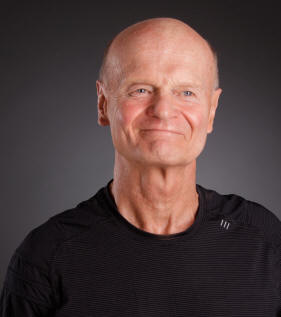
Photo by Pat Berrett
June 1, 2026
Comment on this article: FEEDBACK Ripped Enterprises, P.O. Box 51236, Albuquerque, New Mexico 87181-1236 Home | Products Index | Ripped Bks | Lean Adv. Bks | Lean For Life | Recommended Bks | |Consultations | Tapes | To Order | Feedback] Copyright © 2026 Clarence and Carol Bass. All rights reserved.
|