|
|
528 Chama, N.E., Albuquerque, NM 87108 http://www.cbass.com |


From The Desk Of Clarence Bass
By Clarence and Carol Bass
|
|
Protein - Again
The July/August Nutrition Action takes up the issue of protein in the diet with an article on five popular protein myths. They point out the prevalence of food labels touting the "low-carb" label.
Myth #1: Most people get too little protein. Dr. Christopher Gardner, professor of medicine at Stanford University School of Medicine, points out a little known fact about the RDA (Recommended Daily Allowance) for protein. RDA for protein is .8 grams for every kilogram or .36 grams per pound. But the experts that come up with these figures go through an interesting thought process as they calculate, starting with the question: What does the average person need? But some people would get too much, some too little. So they set the RDA "considerably" above the average - two standard deviations above.
Thus, they say, 97.5% of the population meets or exceeds the requirement for protein if they use the RDA. If you add more protein as a safety factor you are getting a safety factor on top of a safety factor.
The only people at risk for too little protein are 19% females and 13% males aged 71 or older because of their reduced appetite. The average adult gets a third more protein than the RDA and 25% of adults get twice the RDA.
Myth #2: Your body can store extra protein. Wrong, they say, it can't be stored in the liver or skeletal muscles like carbs in glycogen form. If it isn't used to build muscle or other lean tissue today, it will be turned into carbs or fat by tomorrow.
Myth #3: More protein means more muscle. Yes, the body needs protein to build muscle, but it can only synthesize 25-30 grams of protein in a meal. They point to test results from the OPTIMen trial showing no difference in lean body mass, muscle strength or power between men getting the RDA for protein and men getting 60% more each day after a six-month period with packaged meals.
Professor Bettina Mittendorfer, associate dean for research at the University of Missouri School of Medicine, says that age does make a difference in protein's effect on muscle - older people get less of a gain than younger adults eating the same amount of protein and that it is thought that this may be one of the causative factors of loss of muscle mass in aging. She points out that research indicates that extra protein and strength training show gains in people 18-45 because they haven't reached their growth potential. Most studies only include adults ages 18-30.
Later in the article, however, they point out that there are ongoing studies being done by those who help with the RDA recommendations to examine "protein's impact on the loss of muscle mass, muscle strength, or physical performance with age."
Regardless of your age, they stress, it is exercise that matters most for muscle growth. They give an example of testing done on people over 65 assigned to one of five groups. Two groups got a protein supplement twice a day and were assigned either light or heavy resistance training three to five times a week. The other three groups did no training but received a supplement. After a year only the first two groups that exercised showed gains with only the heavy resistance training group showing larger thigh muscles.
Mittendorfer says that with exercise, bigger gains in strength come sooner than muscle size. And, she adds, "it's strength you need to maintain your health span."
Should you take a higher dose of protein after workouts? The research the article included showed that there was no difference between those people taking the protein supplement right after a workout and those doing it a few hours before bed.
Myth #4: Animal protein beats plant protein. Bonnie Liebman, MS, Director of Nutrition at the Center for Science in the Public Interest and the writer of this article, enters a much debated subject by discussing her #4 myth.
She says it's a misconception that plants are missing some amino acids. They all have the nine-essential amino acids - but, yes, do differ in "minor" ways, and you only get in trouble with a plant-based diet if you are eating only from one source, for instance eating an all-rice diet. Yes, grains are lower in lysine and beans in methionine, but they don't necessarily need to be eaten together. She states that all protein whether plant or animal is broken down into its amino acids which the body then reassembles, and it doesn't know whether it's from a cow or broccoli. "It's just a building block."
She points to a recent study of 40 individuals 20-40 who ate either a plant-based or omnivore (animal and plant) diet. They also were divided in groups where the protein was either evenly distributed in meals or varying times. The resulting muscle biopsies after 9 days showed no difference in the protein source or when it was taken. Dr. Gardner from Stanford, quoted earlier, concludes: "We can stop obsessing about getting enough protein or the right amino acids."
Myth #5: Extra protein helps you eat less. Dr. Gardner points to a study by professor of nutrition Barbara Rolls which showed that study participants, told to eat until they were full when given meals of varying protein content, ate the same number of calories every day, regardless of the protein content.
As to weight-loss diets, POUNDS Lost, the largest and longest trial done with 811 people over a two year period, showed the same results for the higher protein and the lower protein diets with an average loss of nine pounds. ** The last paragraph of this article returns to their initial mention of the prevalence these days of products with the label "low-carb," with the caution that if you think that protein-fortified cookies, etc. are harmless, think again. "It's no different than overdoing ordinary cookies."
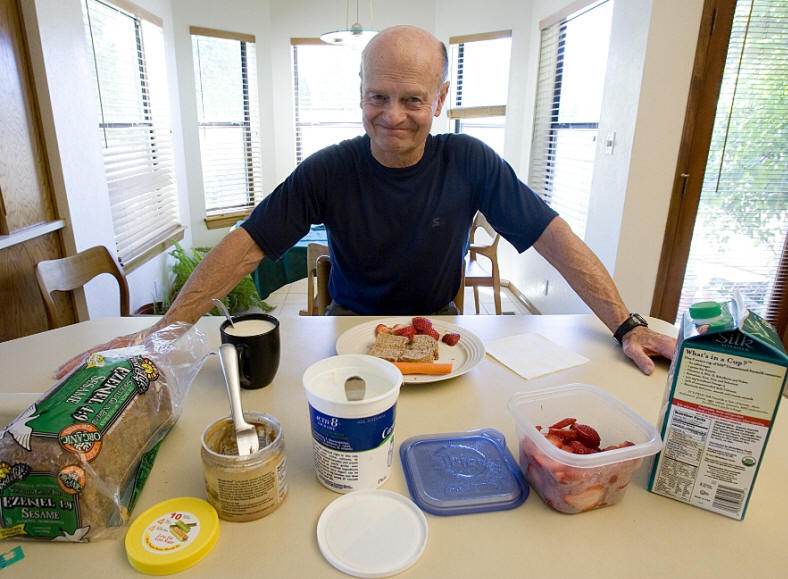
My Take While it's interesting to hear all sides of the much debated protein question in this field, I have tried to keep my nutrition simple except for a time in my youth when I was having Bob Hoffman protein shakes with a raw egg every morning, and a very short time when I experimented with - and rejected - a low-carb diet before entering the bodybuilding field.
I am not a fan of counting calories or protein because I find it too onerous and not necessary. Since my very first book in 1980 I have recommended a whole foods diet with no processed or minimally processed foods, and I try to get a protein source at every meal - it doesn't have to be much, say, a cup of milk, and I leave it at that.
I have never counted protein grams per kilogram of weight. No need as long as you eat a balanced diet of whole foods.
And I will add something Mike Mentzer (IFBB Professional Bodybuilder and author of Heavy Duty Training) wrote many years ago:
"Athletes believe that protein is the magic nutritional substance that will make them bigger and stronger and better able to train. While it's true that protein is vital to the maintenance of health and an important factor in cell growth, its role in building strength and improving performance has been grossly exaggerated."
"The word "protein" derives from the Greek and means "of first importance," but it does not mean "of only importance." Maintaining health and providing material for growth require over forty different nutrients, most of which can be found in a regular diet of water, carbohydrates, fat, protein, vitamins, and minerals."
Still good advice.
Photo by Laszlo
October 1, 2025
Comment on this article: FEEDBACK Ripped Enterprises, P.O. Box 51236, Albuquerque, New Mexico 87181-1236 Home | Products Index | Ripped Bks | Lean Adv. Bks | Lean For Life | Recommended Bks | |Consultations | Tapes | To Order | Feedback] Copyright © 2025 Clarence and Carol Bass. All rights reserved.
|