|
|
528 Chama, N.E., Albuquerque, NM 87108 http://www.cbass.com |


From The Desk Of Clarence Bass
By Clarence and Carol Bass
|
|
How About a Prescription for Food if Food is Medicine?
That's the question that Dalhousie University in Canada is trying to answer with a study named STRONG. Researchers designed a program that includes a prescription for a daily dose of blueberries, 30 grams of protein powder, and a personalized health plan of exercising three times a week to see if it can help older people with frailty and heart health. Apparently food prescribing is gaining traction in Canada largely in Alberta and Ontario. The Blueberry Prescription
This study is directed towards patients experiencing food insecurity and at risk of diet-related chronic diseases. They are evaluated for cognitive problems and undergo other physical tests. The patient is then given a large box of frozen Canadian wild blueberries (a cup a day) and a prescription for fresh fruit and vegetables which gives them access to subsidized or free healthy foods. Their personalized workout routines are monitored, and they are assessed every three months for a year, then again at two years.
Dietitian Leah Cahill, the principal investigator and associate professor of medicine at Dalhousie says that most people know eating well and exercising is good for them, but they don't necessarily do it. She hopes that giving the patient a prescription will decrease the "mental load" of having to figure it out alone. Another researcher says that the prescriptions provide the added incentive of "doctor's orders."
Cahill adds, "The idea of prescribing lifestyle as a way to prevent people even getting sick, that's where our hearts are."
Challenges exist, with funding one of the major concerns. The team received a $1-million grant as part of a philanthropic organization's commitment to fund "transformative medical research" at universities and medical schools in Canada. An article commenting on the study says that more research is needed to evaluate "the effectiveness and cost-efficiency relative to other health care, public health and social welfare programs."
A 67-year-old male patient with Type 2 diabetes and arthritis on the program is enthusiastic and reported that it was difficult to get used to the new schedule, but now it is a pleasant routine. When he turned 60 he said "everything went downhill," but after three months on the program he has already noticed a change in himself, and he is hoping this means that there will be additional long term results.
(This information was reported in February 2026 by Kayla Hounsell, a network reporter with CBC News based in Halifax.)
Another Take on the Same Issue
An unrelated article in Tufts Health & Nutrition Letter in the same month talked about "Food as Medicine?" (You will note their question mark) and their take is more directed to the phrase itself.
They agree that chronic diseases cause 70% of deaths in the US each year with poor diet a major contributor. They add that since 2023 the US has had a federal initiative called "Food Is Medicine," with the goal of improving health in the US, and the American Heart Association has an initiative called "Health Care by Food." Tufts points to Hippocrates in 440 BCE saying, "Let food be thy medicine and let thy medicine be food."
And they add that what you eat "helps build and repair cells and tissues, and prevent inadequacies," with fiber keeping your digestive system healthy and nourishing beneficial microbes. But too much food leads to overweight, diabetes, heart disease, and stroke, with negative impacts on the liver, gallbladder, kidneys, etc. The key is the proper balance.
While nutrient deficiencies are rare in the US today, at one time they were common and foods really did cure diseases: think about scurvy (Vitamin C deficiency) onboard ships which over several centuries killed more than two million sailors which was cured by limes or lemons. Or fortifying salt with iodine solving the thyroid condition called goiter, or adding folate to refined flour to prevent the birth defect of spina bifida.
And there are instances where eliminating food was the solution: lactose intolerance or the protein called gluten triggering a immune response that damages the small intestine.
But Tuft's (a private research university and medical school) issues a caution against throwing out traditional healthcare solutions. Modern medicine has made miraculous advances (antibiotics, injectable insulin and blood pressure medications) which now allow people to survive what had been death sentences.
Their final statement: Although healthy dietary choices are a powerful tool for wellness, food does not replace medical care and medications. "Food is food, and medicine is medicine," so let food work in tandem "with medications and other lifestyle habits like physical activity, and getting enough sleep."
My Take
These two articles differ in their intent: Tufts is issuing a warning against a well-intentioned and growing health movement that may be obscuring a broader picture of health, and the "blueberry prescription" is presenting a health oriented lifestyle program that may be successful but has structural barriers such as cost, time and access - real-world conditions.
The articles are concerned, however, with a growing health movement. The movement brings more awareness on dietary intake with its discussion of whole foods, reduced consumption of ultra-processed foods and improved policy changes such as better food labeling, reduced trans fats and healthier school meals and is a positive cultural shift.
But Tuft's reminder that diet is one important pillar of health, not the entire foundation is also worthwhile.
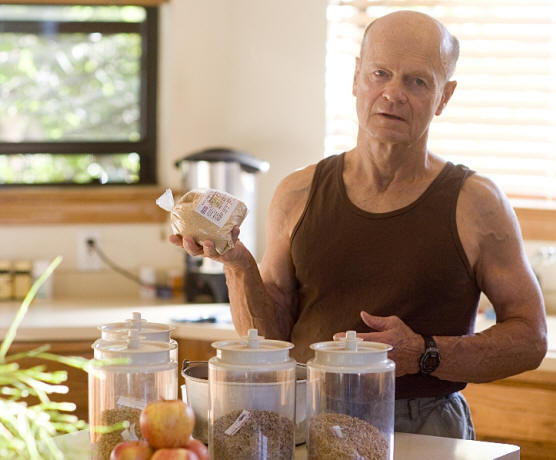
Photo by Laszlo
March 1, 2026
Comment on this article: FEEDBACK Ripped Enterprises, P.O. Box 51236, Albuquerque, New Mexico 87181-1236 Home | Products Index | Ripped Bks | Lean Adv. Bks | Lean For Life | Recommended Bks | |Consultations | Tapes | To Order | Feedback] Copyright © 2026 Clarence and Carol Bass. All rights reserved.
|